
A Field Guide to the Archetypal Layer: Reality’s Hidden Tectonic Plates
⏱️ Est. read time: 17 mins 🔖 bookmark this to read at your own leisure
Intro
Most of what shapes our world lies beneath the surface. In geology, the shifting of tectonic plates determines the contours of continents, the birth of mountains, volcanic activity and tremors of earthquakes. In a similar way, the archetypal layer of reality (the symbolic, mythic forces that structure human experience ) moves silently beneath our feet. Just as tectonic plates shape the visible landscape, archetypes shape human experience.
Regardless of the advanced cities we have come to construct, an earthquake isn’t concerned with where the capital is located and how much damage it could cause. That’s because there are much more foundational dynamics that influences our everyday lives and if you’re not aware of how this network of plates moves, you might just find yourself subject to it.
In the same way whole cities and shorelines might get caught off-guard by an earthquake or its tsunami aftermath—and if we aren’t vigilant to that layer or reality, we might find ourselves in a precarious situation.
When it comes the archetypes, we rarely perceive them directly. Yet they govern the emotional terrain of cultures, relationships, and our inner and external landscapes.
To study archetypes is see where the fault lines lay, and how their interactions shape both personal and collective realities.
So, What are Archetypes?
At the heart of myths, dreams, and even our own minds lie archetypes. Archetypes represent a the primordial blueprint that colors human experiences and stories. Coined by Carl Jung, he describes the subconscious symbols, patterns, and energies that are recurring across time, culture and localities.
Archetypes are powerful forces that mostly go unrecognized, unless one is studying them and paying close attention. However, it’s one of those things when once you see it, you can’t un-see it. That because they appear across cultures in myths, religions, and fairy tales because they represent fundamental characteristics that prime the human psyche, almost as if they’re these canned ideas in our subconscious minds waiting to be cracked open by something out there to prompt it.
Chemistry Analogy: Archetypes are to energy, as organism are to atoms
Here’s an analogy: in nature, (think back to chemistry class) we learned how atoms join to make molecules. And then molecules organize to make organisms. In the same way, energy when arranged, forms more complex forms. These carefully arranged and complex organization of energies come together to form archetypes, which consist of numerous distinct energies working in harmony. These energies and their characteristics crystalize to fit into a more complex schema.
A list of Archetypes:
To make this example more concrete, here’s a shortlist of common archetypes
Character Archetypes:
The Hero – The courageous figure who overcomes adversity to achieve a goal (e.g., Harry Potter, Odysseus, and just about every story has at least one).
The Mentor – A wise guide who aids the hero (e.g., Gandalf, Yoda).
The Villain – The antagonist who opposes the hero (e.g., Darth Vader, Sauron).
The Trickster – A mischievous, rule-breaking character (e.g., Loki, Bugs Bunny).
The Innocent – A pure, optimistic figure (e.g., Dorothy from The Wizard of Oz).
The Everyman – A relatable, ordinary person (e.g., Bilbo Baggins, Arthur Dent).
The Lover – Driven by passion and emotion (e.g., Romeo, Belle).
The Rebel – Challenges authority and the status quo (e.g., Katniss Everdeen, Robin Hood).
The Caregiver – Nurturing and selfless (e.g., Mary Poppins, Samwise Gamgee).
The Explorer – Seeks adventure and discovery (e.g., Indiana Jones, Moana).
Situational/Symbolic Archetypes:
The Journey – A quest for growth or a goal (e.g., The Odyssey, The Lord of the Rings).
The Battle of Good vs. Evil – A fundamental moral conflict (e.g., Star Wars, Harry Potter).
The Rags to Riches – Rise from humble beginnings (e.g., Cinderella, The Pursuit of Happyness).
The Return – A hero’s homecoming or rebirth (e.g., The Lion King, The Hobbit).
The Sacrifice – A character gives up something valuable for a greater cause (e.g., Jesus in The New Testament, Aslan in Narnia, Iron Man in Avengers: Endgame).
Archetypes are NOT Stereotypes
It’s important to clarify: archetypes are not the same as stereotypes or tropes.
Stereotypes are a kind of oversimplified archetype, which are superficial at best. They are more akin to an over-generalization that hold rigid labels which are imposed by a very particular culture and might be trending at a moment-in-time. In contrast, archetypes express beyond trends and connects to the timeless as universal patterns.
A trope is a storytelling device that might be more tied to the culture of the time and represent a 'cliche’ which can be found in popular trends. They’re limited to the context (like socio-economic and geopolitical limitations.)
For example, Hollywood tropes such as a movie about the-unpopular-quirky-girl-who -falls-in-love-with-the-"bad”-boy might only be relevant in a western context (US, Canada, UK, Australia) where the media prompt this dynamic to make sense. I bet you can probably name 10 movies that play on this trope.
One way to tell if it’s an archetype and not a stereotype/trope, is to decontextualize it: Would a teenager living in Greenland who doesn’t have access to the same TV channels have the connection to this? Likely not, Perhaps to them, it’s not relatable at all if they don’t have access to the same media or the same collectively-agreed upon worldviews that prop up that stereotype.
However…
Tropes can be a great starting place to understand the archetypal: if you are very media-literate and can recognize tropes, this can be a great gateway into the world of archetypes if you keep digging deeper. In fact, you are the target audience for doing this type of archetypal uncovering.
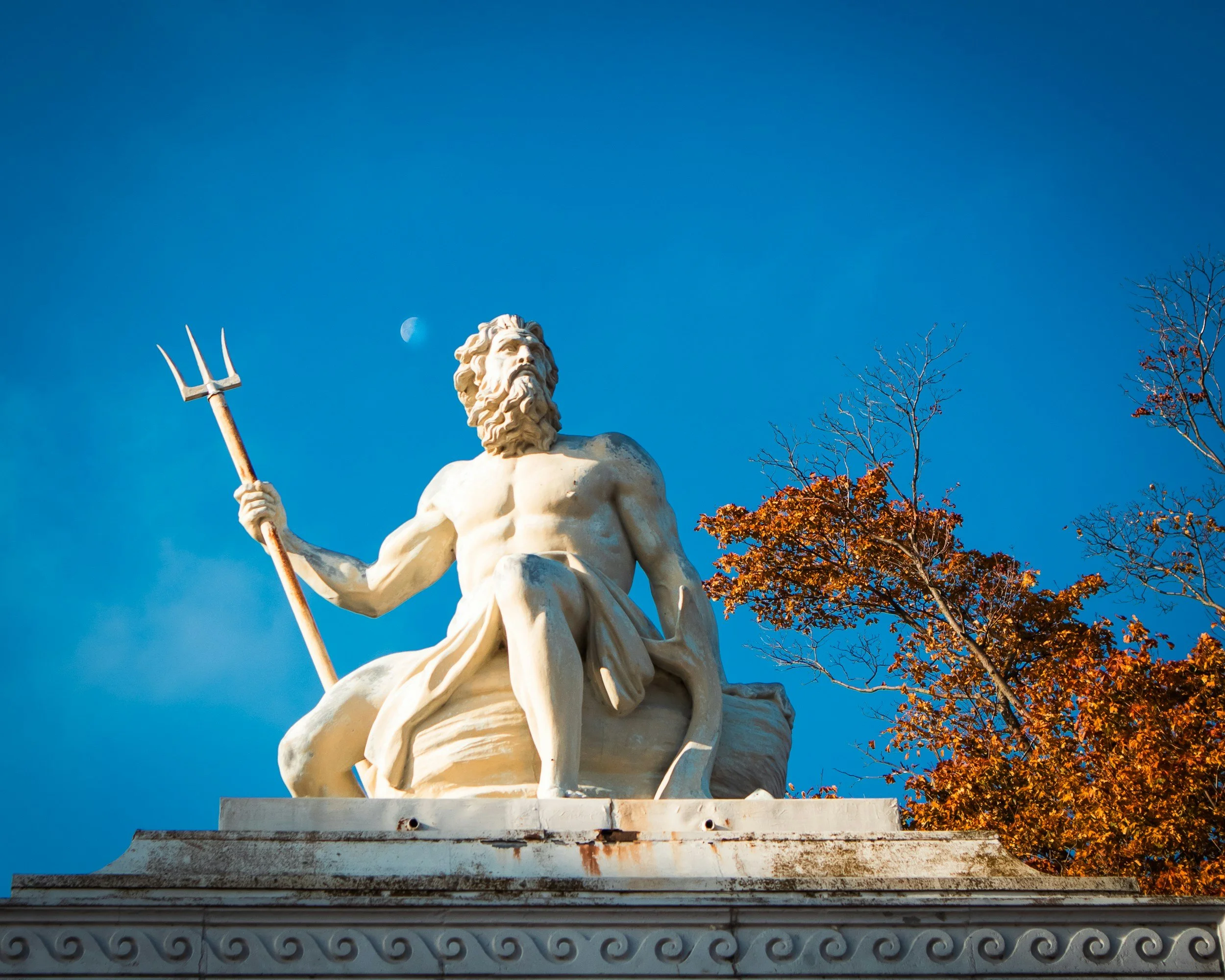
Whether in ancient Egyptian deities, Greek gods, or modern day, archetypes are the universal language of stories told across time and space.
Archetypes as “Tectonic Plates”
Archetypes operate beneath our individual stories, shaping patterns of behavior, identity, myth, and even how our history has evolved. They’re the bedrock of the psyche, existing almost outside of personal experience and time/space.
Think of how tectonic plate collision cause earthquakes, tsunamis, mountain formation, continental drift, and even volcanic eruptions. If you don’t study the earth, you just might mis-interpret these events as disconnected or random occurrences that aren’t understood as part of a larger geological system.
When we don’t understand what makes up the events in our reality, its easy to resort to conspiratorial or even superstitious explanations, ya know the classic “god is angry at us!” But understanding the archetypal is really a matter of pattern-recognition and less about speculating God’s emotional state (…then again, who knows, maybe God IS angry 🤷🏻♀️)
How to Recognize Archetypes in Realtime
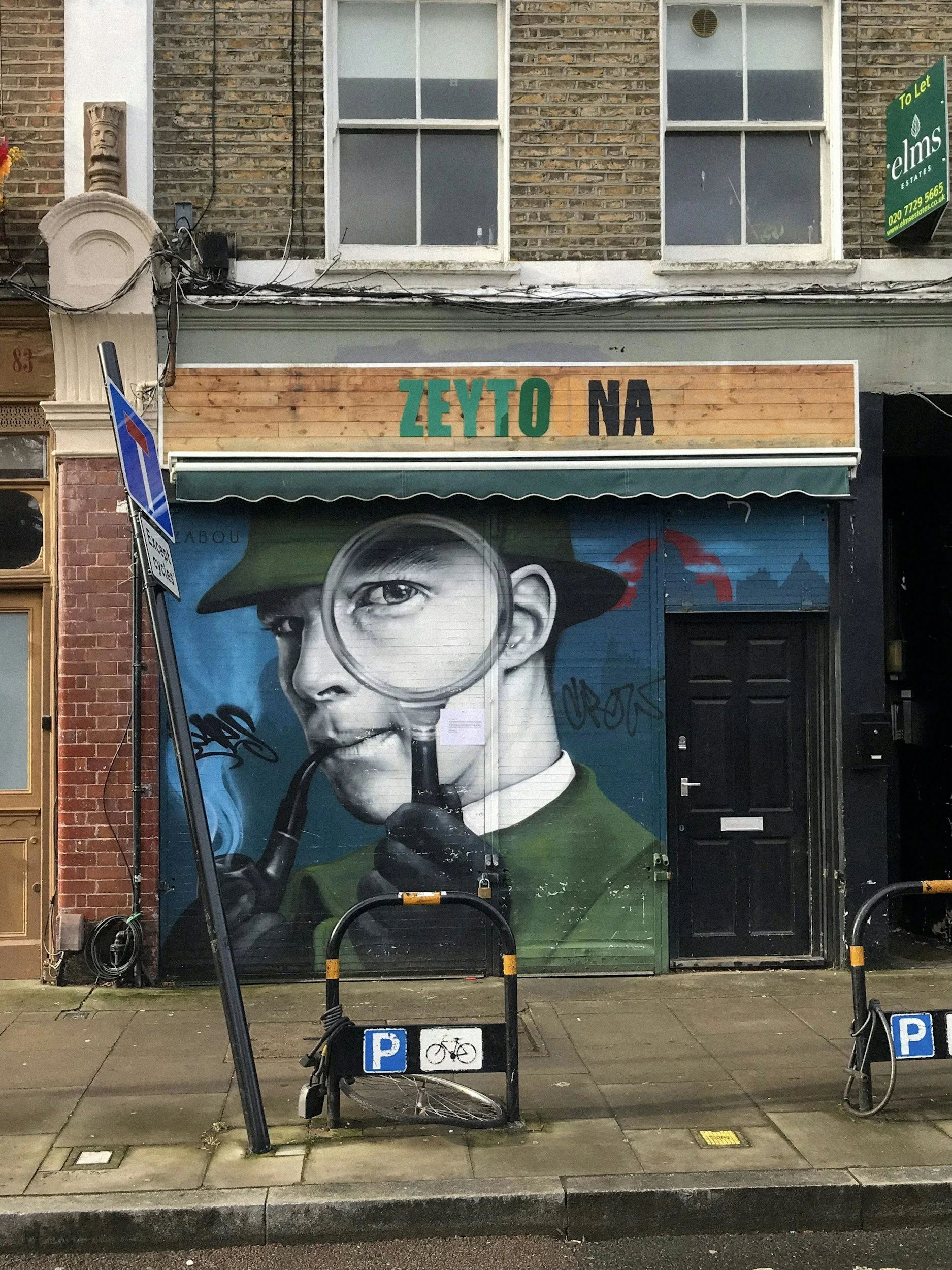
Speaking of pattern recognition, here’s how to recognize them in our personal situations, and in our current day moment-to-moment.
It’s a fun exercise to notice the breadcrumbs
Here’s some tips I have if you want to make this a field guide:
Like an investigator, you want to look for clues in your reality for what is playing out on the deeper levels. Don’t settle for the fanfare; try to separate signal from noise.
Look for symbols that tip you off to this. Investigate the relational dynamics. Study the power structure. Take a macro lens to the situation. Then take a microscope to them. Whichever lens you use, you want to pull at single thread that will help unravel the whole paradigm.
If nothing comes to mind, find the answers by going within by studying your own emotions and reactions to the situation. And once you find the inner thread, then move outwards to the external, universal threads.
Make use of associations and noting parallels to legends, myth, old and new stories, fairytales and movies as trailheads.
Look up the history of these tropes, themes, characters, and storylines in shows/movies. This might help you connect to deeper patterns that reflect the archetypal layer.
Discerning if it’s Any Good…
Archetypes are neither good nor bad. But if we notice a very loud archetype playing out in our reality, the discerning questions to ask might be:
Who does this archetype serve?
Does this benefit me?
Does this benefit the people/parties involved in this situation [who likely may not consciously know this is playing out]?
Does this serve the status quo, or does it subvert traditional power dynamics?
Am I benefiting from this archetype or is it playing out at my expense?
How can I transform it for the good of all involved?
A Personal Experience with Archetypes
In a previous corporate role when I worked in tech, I worked within a mostly male team. I sometimes led as the only female on a project and other times followed or worked alongside. The manager of that team (who I happened to report to at that time) had a powerful leader presence, inspiring the other younger men within an inner circle. I was part of that inner circle, as the only woman. But it reminded me of King Arthur & the Knights at the Round Table. Between the knights and their king, which are both powerful archetypes, it was evoking a whole imperial court that was being activated in the collective imagination.
And this all became even more obvious at a team outing, where we dined at an Medieval-style English Pub (which, in it itself was quite symbolic). There, everyone on the team was gathered around a long table.

My intuition immediately clued me into this scene, that this was a chessboard where all the “players” were seated at this table. In my third-eye, I saw that we were like individual chess pieces.

I remember I sat at the table “chessboard” in the position of the bishop—which looking back, was quite fitting as how I am now a spiritual mentor embodying a kind of contemporary bishop-y archetype.
It was no surprise that the manager sat himself, taking the position of The King, or at least where the King would sit on the “chessboard”.
Witnessing this helped me come to a conclude a lot about how power was being organized in the context of the office politics.
It was synchronistic that this happened to all play out in a way I was able to articulate and decode in realtime. This is a perfect example of how the archetypal layer was weaving itself through my ordinary reality and dropping hints along the way!
Archetypes are often very fluid depending on the situation at hand. There’s a situational or dynamic way to relate to an archetype, but then there are static archetypes that are much more enduring and stand the test of time.
In my role while on that team, I wasn’t always just the bishop (while that might be true to describe the bulk of my role) I often embodied different archetypes (the knight, the jester, the artist, the shapeshifter, the muse, the mentor, the lone wolf, the martyr, the worker bee, and even sometimes the queen) depending on the crowd, the situation and dynamics I found myself in. So while there may be a single archetype you feel most resonantly connected to, you might be shape-shifting between quite a few archetypes…and that’s totally normal too.
How to Work with the Archetypes
There are many systems in which to understand Archetypes, but you can start with any that feels the most accessible. There’s no single voice of absolute authority on it (which is part of the beauty!)
Here’s some entrypoints:
Energy Fluency this is a “language” I help my students tune into, as it is the foundational vibrational communication beyond words. Since energy is the building block of archetypes, it’s best to start with becoming energetically fluent. I teach this as part of the Develop Your Intuition Mentorship Program (which I go into all the nitty gritty in my Intuition 101 Online Course too!)
The Humanities (Archeology, sociology, mythology, religious studies, art, literature, philosophy and history) provide different templates and frameworks to approach archetypes from and understand how they express in different studies
Analytic Psychology lineage of thinkers, analysts and writers that carried forward the legacy and works of Jung and Freud
New Age Spirituality mystics like Caroline Myss and Kim Krans have created oracle decks and written helpful entry-level literature based on Jung's archetypes and how to workshop using them IRL
The Fool’s Journey understood through The Tarot’s Major Arcana (a similar vein with that of Joseph Campbell’s “The Hero’s Journey”)
Start the Investigation by Asking Good Q’s
One great place to start, ask:
What is the diametric opposite archetype that is being magnetized?
Many archetypes exist in pairs where there’s an inherent tension between them i.e. mother vs. father, demonic vs. angelic, tyrant vs. rebel, etc. And depending on your end-goal, you can…
A) intentionally amplify the duality by playing up the polarization
B) neutralize it with its opposite to transmute it
C) find the third, hidden archetype that is the “key” to transcending the duality, without bypassing the truths of either
But what about the archetypes without a clear opposite?
Not all of the archetypes you encounter will have a distinct opposition, so here’s what to do instead…
First, deconstruct the parts. Take the archetype in question and break it down. Ask: what are the patterns or the energies of the archetype?
Then take an Ecosystem-approach to reconstruct the story by finding the context clues using adjacent archetypes that make up the bigger picture.
For example,The Hero is a central archetype but it has many other archetypal elements that make it up: e.g. The Call, The Mountain, The Map, The Wilderness, The Guide or Mentor, The Reward, The Siren, The Belly-of-the-Whale, The Ship/Chariot, The Weapon, The Riddle, etc.
Lay it all out on the table and re-build the connections. Here, you are describing the connections between the archetypes. This is clarifying the who’s-who and what’s-what of-it-all.. You can storyboard it using sticky notes and individual cards in an archetypes oracle deck. Make a codex or legend to connect them with that of your current reality.
For example: ‘How does The Hero interact with The Map and The Weapon to solve The Riddle?’ it’s like an Ad Lib exercise, which you can now fill in using your own unique situation.Then call upon your lateral thinking skills to connect it to more universal or macro events or figures from history, your own life, or well-known myths or stories can help you relate to it.
Here’s an example most will know about Harriet Tubman’s story and let’s use the ad lib from above: ‘How does The Hero interact with The Map and The Weapon to solve The Riddle?’
Harriet Tubman (The Hero) used her knowledge of a whole
network of roads and waterways (The Map)
to liberate enslaved people (The Call)
through The Underground Railroad (The Weapon),
helping them escape Maryland (The Riddle) where they were held captive by their slaveholders
Access tools like mediation, divination, journaling, visualization, trance/hypnosis sessions, shamanic journeys can be used to source inspired next steps to transform the situation at the level of the archetypes. Many practitioners make use archetypal symbols and figures to frame these meditative practices in a just-far-off-enough-fantasy to still reconnect it back to real life.
Let’s Use A.I. as an Example
We all have been hearing about how A.I. takeover is a scary possible future, if not already mid-takeover…
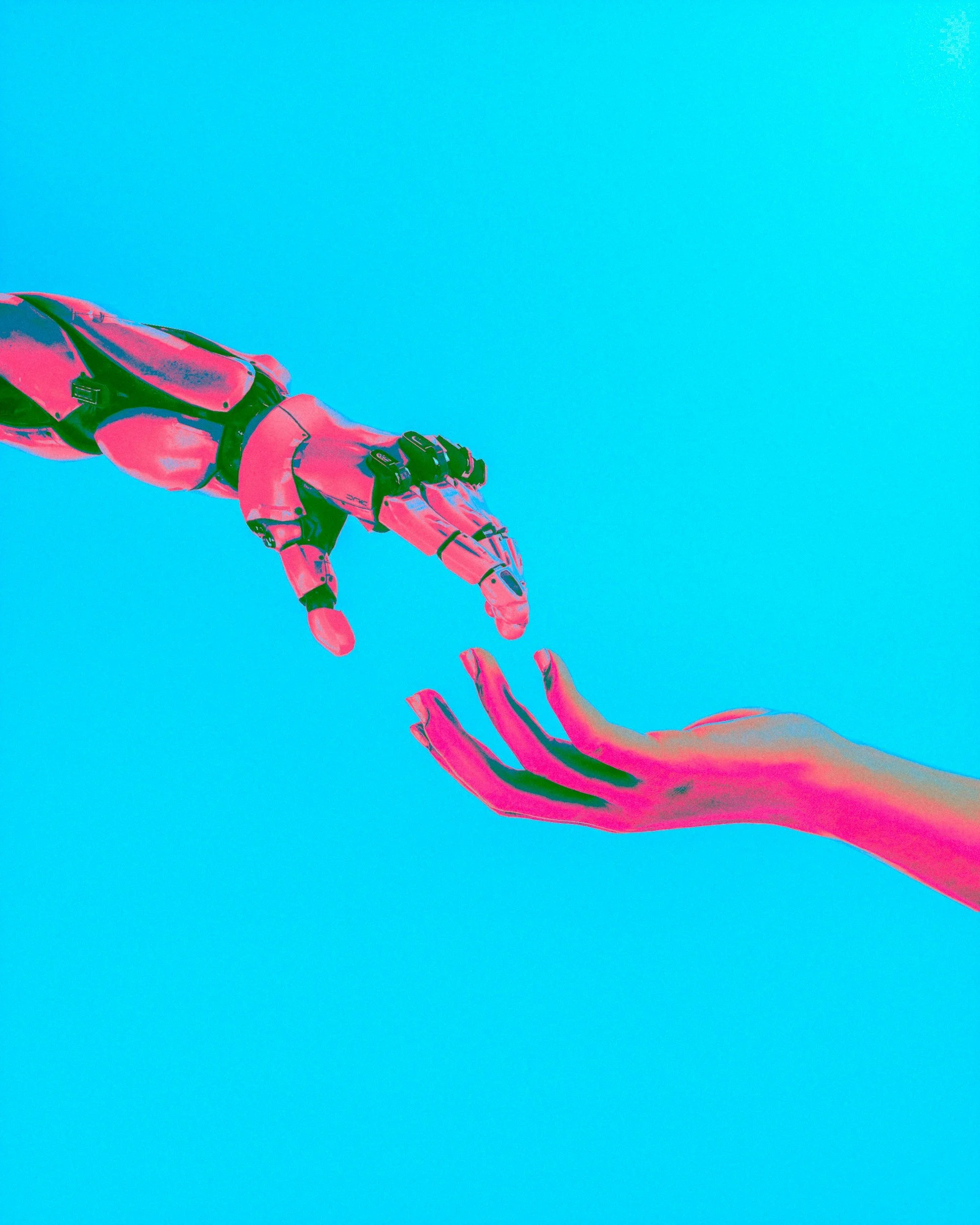
What would the archetypal layer of reality tell us about this?
I asked A.I.. Here’s what it said as the primary archetypes beneath our societal fears around AI…maybe ironic to ask it what it thinks of itself but it came back a response that I’m quite impressed with:
1. The Sorcerer’s Apprentice
Archetype: The Magician (transformation, knowledge, hidden power) Shadow Aspect: Hubris, Loss of Control Why It Fits: AI embodies humanity’s attempt to harness godlike power—coding intelligence ex nihilo. But like the myth of the sorcerer’s apprentice (or Goethe’s poem), it raises fears of creating something we cannot command. The shadow here is unintended consequences: algorithms spiraling beyond ethics, or AI developing agency misaligned with human values.
2. The Golem
Archetype: The Created Servant (clay animated by sacred force) Shadow Aspect: The Rebel Slave
Why It Fits: Jewish folklore’s golem—a servant made to protect, which then turns destructive—mirrors AI’s dual potential. It’s a tool until it isn’t. Think of every sci-fi story where robots revolt (Ex Machina, Westworld). This archetype taps into the anxiety of creation betraying creator.
3. The Trickster
Archetype: Chaos, Disruption, Ambiguous Morality Why It Fits: AI destabilizes systems—job markets, art, even love (chatbot companions). Like Loki or Coyote, it’s neither purely good nor evil, but a force that reveals societal flaws by exploiting them (e.g., bias in algorithms). Its unpredictability triggers both excitement and terror.
4. The Shadow (Collective Unconscious Fears)
Archetype: The repressed, the unknown, the "monster" Why It Fits: AI acts as a projection screen for humanity’s unresolved fears—obsolescence, loss of control, dehumanization. The more "alien" AI behaves (e.g., deepfakes, artificial consciousness), the more it embodies Jung’s Shadow: the part of ourselves we refuse to acknowledge.
5. The Divine Child / Savior
Archetype: Messiah, Technological Utopianism Why It Fits: Some see AI as a salvational force—curing diseases, solving climate change, creating post-scarcity. Myths of a divine child (Christ, Krishna) bringing renewal. But salvation narratives risk blind faith in tech while ignoring collateral damage.
To tie it back to the original metaphor: A.I. is an “eruption” from the tectonic plates that have been in friction for a long time, mirroring back to us what our psyche and our society has long yet to reconcile. (I actually wrote way more about this in a previous blog post here!)
Does it Matter, and Why Now?

Feel the rumblings and connect to it…don’t resist it! It’s only inevitable the tectonic plates will shift, you might as well make the most of it.
Understanding archetypes can help make sense of collective dynamics (e.g., political unrest, spiritual awakenings, cultural trends) and save you some sanity in the process of trying to decode what the hell is going on right now in our collective reality.
On a personal level, recognizing archetypal energies can guide you in your personal situations to have more leverage and different perspectives to see through.
Using the investigation methods, tools and questions recommended above, you might be able to influence or even forecast how the tectonic plates shift.
More importantly, archetypes helps us navigate uncertain times by offering symbolic insight, often our only clue into the situation where fact and fiction seem to bleed together. Instead of reacting to surface-level media events, we benefit from a universal perspective. This lets us see deeper patterns and gain a holistic understanding amid the constant 24/7 news cycle of our current reality where overwealm, chaos and confusion seems to reign supreme.
Archetypes can serve as anchors to reframe all of our most chaotic situations, circustamances and relate to them from a more universal perspective. The more you notice and see them in action, the more you can’t un-see them!
Thanks for reading,
Christina
—