
New Years Resolutions Hack: Build Virtuous Cycles & Escape the Vicious Ones

Whatever brings clients to me, there’s usually a deeper goal behind why they want to work with a mentor/coach/intuitive. Sometimes it’s a smaller goal (eat healthier); sometimes it’s broad and abstract (find my life purpose). But underneath it all, every goal involves examining the cycles, behaviors, assumptions, thoughts, and motivations that shape the outcome.
ANd just to put you at ease right away, this isn’t a shame-y blog post meant to make you feel bad if you haven’t been making progress on your resolutions—quite the opposite, actually. My intention is to share something that can be a genuine game-changer for your goals, and if you haven’t made any progress yet, don’t worry: Lunar New Year is just around the corner (that’s the real New Year anyway 😉).
The success or failure of a resolution isn't about willpower alone; and while we’ve all heard about the viscous cycle, I want to emphasize the power of a virtuous cycle.
This is about which psychological and behavioral cycle you activate where the point is to focus on the SYSTEM and INPUTs, not just shiny outcomes. Although there’s nothing wrong with a shiny outcome if you have one, I’ve come to realize that taking a perhaps counterintuitive approach can drive consistent, sustainable progress.
In this post, I will talk about the differences between the viscious and virtuous cycles and how to set yourself up for success this year.
I will help you identify these cycles and provide a roadmap to engineer your own Virtuous Cycles for 2026 and beyond. Read until the end where I provide a bonus 15-min challenge that you can put into practice immediate.
The Cycle is the Secret: the Anatomy of a Cycle
A cycle is a self-reinforcing loop where an action leads to a consequence (for better or worse), which prompt more of those similar-flavored actions. What do I mean? When you have a bad day, it’s easier to recall all the times you had a bad day and your reflection turns into a pity party of ALL the bad days. This is a classic “spiral”…but spirals can go either downwards or upwards.
Here are some examples of a Vicious vs. Virtuous Cycle
Components of a Vicious Cycle
Unrealistic Goal: "I will do intense cardio for 50 minutes every morning this year"
Inevitable Slip: Miss a day (or three) due to accidentally sleeping in.
Self-Talk: "I'm a failure. I have no discipline. what’s the point?"
Outcome: Reinforces the old patterns because the goal feels hopeless; you see yourself as someone who can't stick to anything.
Abandonment: "I'll start again next year." The cycle reinforces inaction.
Key Characteristics: All-or-nothing thinking, shame-driven perfectionism, focused on the shiny outcome only, spirit is easily broken by a single setback. Doesn’t account for real life and is brittle to “bad days” or even bad weeks. Cannot be sustained for very long / leads to burnout and resentment.
Components of a Virtuous Cycle (How to Build Momentum)
Micro-Habit & Identity Shift: "I will put on my workout clothes after breakfast and grab the protein bar first thing tomorrow morning and aim for 15 minutes at the gym (action) paired with empowering affirmations…
Feeds Positive Self-talk: "My body is a temple. My health is my wealth. Wellbeing is my number one priority (values, beliefs, identity-based).
Small Win & Reward: Immediate sense of accomplishment (internal reward) and while you’re on the treadmill, you then order a yummy healthy salad from the spot next door to the gym (another reinforcement of both the behavior and identity).
Compounding Momentum: That small win builds confidence and positive association. Progress, however tiny, fuels motivation to keep going. You start to believe change is possible because you start to see evidence you can.
Adaptive Growth: This cycle’s self-sustaining and compassionate allowing you to naturally scale the habit up at your own pace and doesn’t break the foundation while doing so. It’s like the momentum of the action and rewards feed the loop itself.
Key Characteristics: Process-focused, celebrates consistency and small wins along the way, anchors in changes from the level of identity, accounts for and is resilient to “bad days” or busier-than-usual weeks, where the emphasis is on self accountability and getting back on the wagon
So how does it all come together?
Start Here: Pour the foundation of psychological safety
Begin from a place of self-empowerment, not self-blame. If you believe “I’m not good enough,” a bad day or week will feel crushing. Instead, make “I will love myself no matter what I accomplish” your baseline.
Your negative self-talk can become a self-fulfilling prophecy, trapping you in their own mini-viscious-cycles that block your larger virtuous ones. So the key here is becoming conscious of your self-talk as the first step. Then you want to curate thoughts that support your success and steer clear of things that contaminate your thoughts
Step 1: Redefine the Goal.
Shift Lose 30 lbs to: " I will hire a personal trainer and build a consistent, enjoyable movement routine that prioritizes fun."
Exercise: Frame one of your resolutions as an identity or system, not just an outcome.
Step 2: Find Your Entry Point
The 2-Minute Rule: Design a habit so easy you can't say no (e.g., "read one page/day" "mini dance party before breakfast").
Anchor it: Tie this to an existing habit that already provides a bit of a reward. Read just before something exciting—like watching your favorite show or a quick pre-breakfast workout. Linking these activities builds momentum naturally.
Step 3: Engineer in Immediate Rewards
Make it a compelling combo, one that pairs difficult😖 with excitement🤩: save your favorite podcast for when you’re jogging outside in the cold.
Track visually (habit tracker) for even more dopamine hits. Some people use marbles in a jar or get a digital tracker as a widget on your phone’s homescreen.
Step 4: Maintainance
Reframe the Slip: A missed day is data. It’s not failure. Nor an opportunity to shame spiral. Simply ask: "What obstacle came up? How can I adjust?"
Keep this process as dry as possible. Avoid emotional overtones—address feelings that come up separately with another practice (e.g., journaling, therapy, life coaching).
Early & Often Check-ins: Psychological safety isn’t without accountability as this is key to sustaining new habits. You don’t need a fixed schedule, but don’t skip check-ins for weeks if momentum fades. When you start noticing you are losing momentum or consistency, reset the goal or the strategy around it, so you can try a new approach. Save the challenge below and use it as many times as you need a reset. This is where having a coach or mentor can certainly help you schedule in accountability.
“Floor is Lava” Game: what is the lava you will avoid? These usually are the negative or indulgent behaviors that you want to moderate. You can game-ify the experience to make it more fun.
Ex: I will only binge Netflix on the weekend if I have finished laundry, clean the bathrooms and written a blog post.
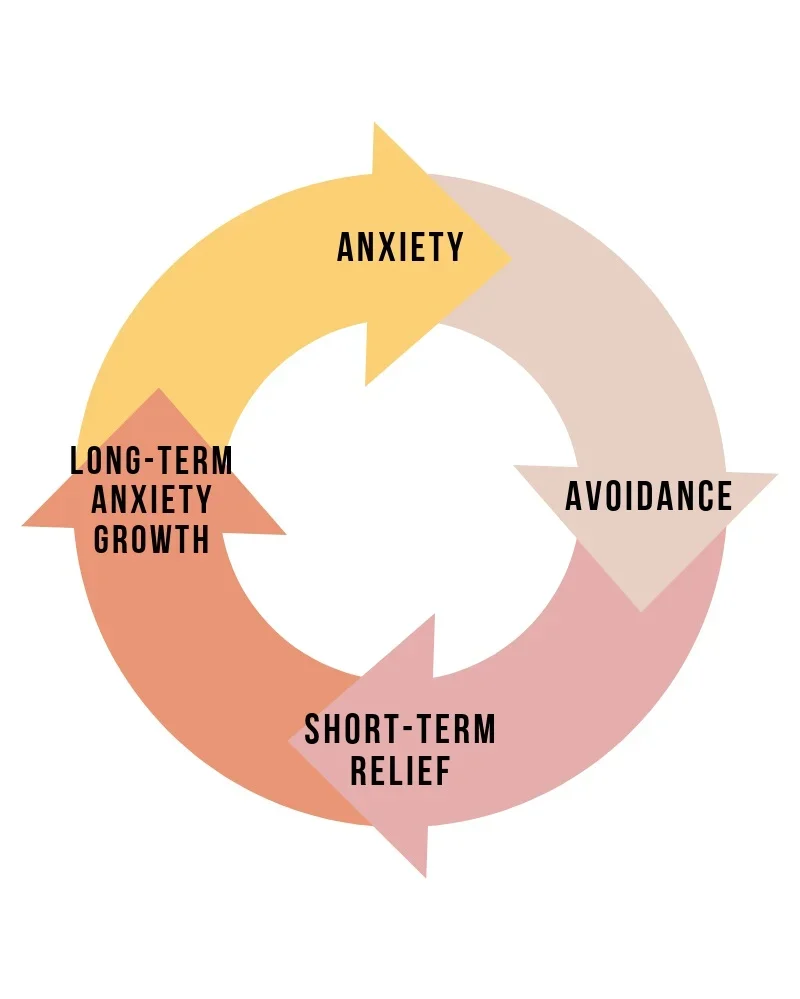
Example of a vicious cycle
Here’s your Challenge
Set aside about 15 minutes to complete this…
Pick one viscious cycle you current are playing out and map it out on paper. Do this with something that isn’t too complex and high-stakes. Tip: USE A REAL PEN AND PAPER!! science shows this helps your brain cement this as more real. You can draw it out like a diagram with arrows.
Then, take another peice of paper, and design your virtuous cycle to override it. Go through all the steps we just talked about…
a. Set psychologically safe beliefs that support and sustain the goal.
b. Define the goal
c. Find your entry point
d. Engineer in rewards
e. Maintainance
Design your ideal cycle, but allow for off-days. Plan how much you will accept when you’re not at your best.
Theorize a few worst-case scenarios and ways this ideal cycle could derail, plus realistic backslide triggers. For each, run a game plan to overcome those possibilities. Then narrate over that with a positive comeback for each scenario as if you were prepping yourself for the best outcome. Write all of these out!
Put a DOLLAR-VALUE ESTIMATE on this virtuous cycle. How much will it save or return, even non-monetary gains? Get creative with this; i.e. itemize a “bill of consequences” with -$$$ costs of staying in the vicious cycle. The point is to psych yourself up by visualizing the tangible ROI to feel empowered and excited to keep pursuing the goal.
If you are struggling with this and want help don’t fret! I’d love to support you! Your first sample session with me is free. Book your’s here: https://pensight.com/x/christinasoulservices